
Finding Identity, Crafting Character, Falling Upwards
Oh, and Giving Away a Million Bibles
By Duncan Reid
What’s the real measure of a Christian business? What makes a Christian business? Is there a KPI for that?

Duncan Reid of Here On Up
After 27 years working across multiple sectors, I’ve come to believe one thing: character is the only metric that really matters.
In 1999 I left a mediocre university with a mediocre degree (joint honours Music and Business Studies, since you asked), a lot of pride, and enough social capital to open doors. I landed a job at Sony Music, first in the product store, then in music publishing—getting songs placed in film, TV, and advertising.
It was an industry in decline, and by today’s standards, pretty toxic. But it was also glamorous. Film premieres. Industry parties. Free bars everywhere (it was only after moving to Bristol that I discovered beer usually costs money). My ego loved it.
I’d always been a Christian—raised as a preacher’s son in a wider Christian family. Jesus had always made sense to me. But the music industry was an eye-opener: drugs, excess, and a culture where faith was the real counterculture. One colleague once told me, “Duncan, I’d have been less shocked if you’d said you were a heroin addict than a Christian.”
When work becomes identity
I tried to live out my faith, but there was a snag. When people asked what I did, I’d say—without a hint of irony—“I work for Sony Music.” The subtext was clear: this is who I am. My job had quietly become my identity.
For a while, I managed the dissonance between what my faith said about me and what I wanted my work to say about me. But eventually—even with the perks—it became impossible to ignore the feeling that my work was superficial. And if my work defined me… what did that say about me?
Existential crisis #1.
Relearning where identity lives
I took it to God. I prayed. The answer came quickly:
“Put your identity in me.”
“Great,” I replied. “But what do I do?”
“You carry on,” He said. “It’s your education.”
So I did. And when people asked what I did, I’d sometimes add, cryptically, “It’s my education.”
Over the years, that education took many forms: a tiny music-tech startup, a global magazine publisher, content leadership for organisations like Cineworld and WWF, digital marketing for a Nashville-based Christian record label (yeehaw), and an edtech startup. A generalist apprenticeship across strategy, creativity, and execution. God was true to His word—it was a far better education than my degree ever was.
Then came existential crisis #2.
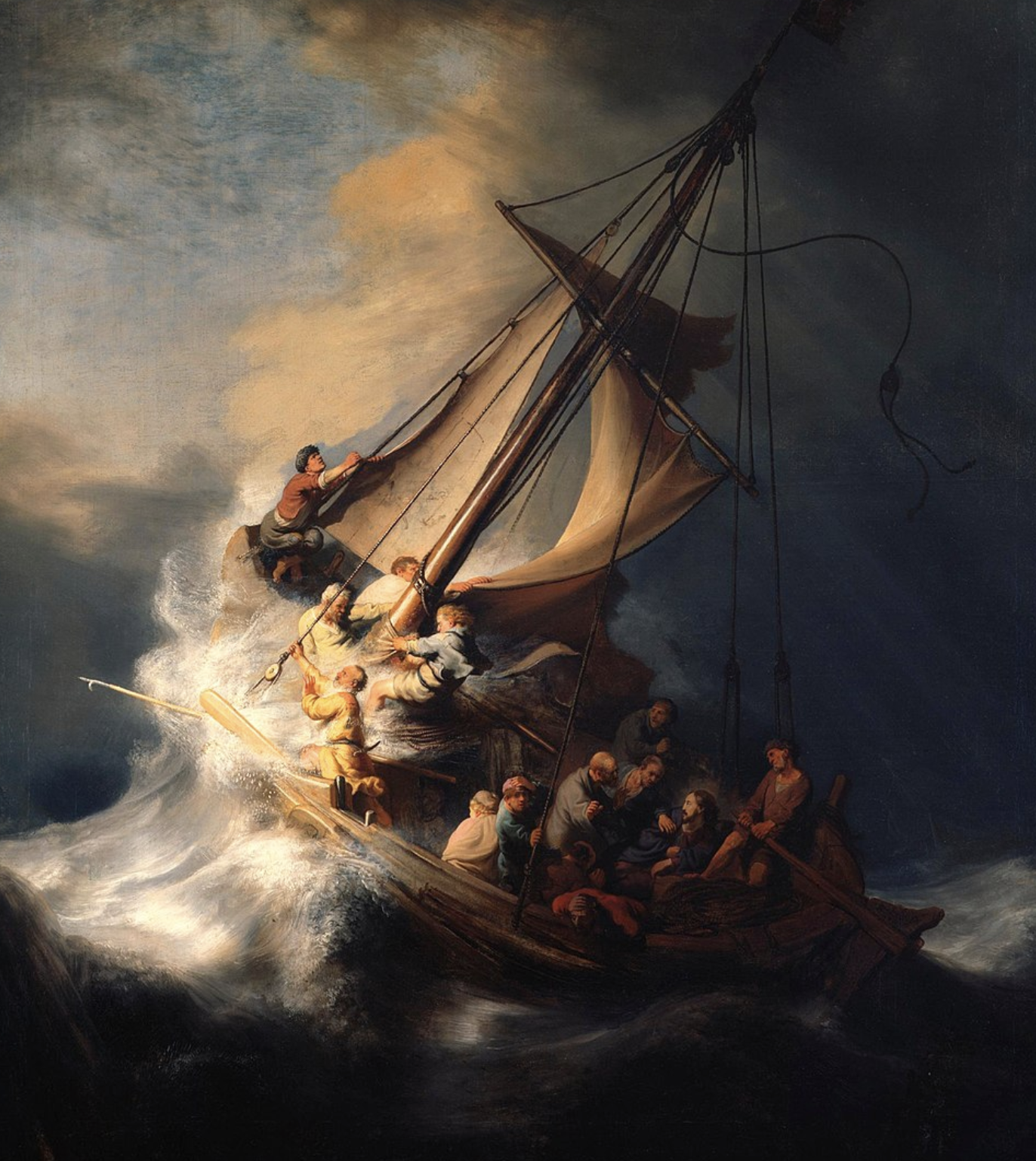
Rembrandt’s Christ in the Storm on the Lake of Galilee
Learning peace in the storm
Some of that season isn’t mine alone to tell. There were external pressures, rising anxiety, and circumstances beyond my control. A storm was brewing. Throughout that time, I kept returning to the story of Jesus calming the storm.
The disciples panic. Waves crash over the boat. And Jesus? Asleep.
I’ve been on a ferry in a storm—sleep was not an option. But Jesus was so at peace with the Father that He could rest amid chaos.
It made me ask: which Jesus am I usually called to imitate? The one who calms the storm? Or the one who sleeps through it?
I couldn’t control the external storm. But I could face my internal one. I realised that while I’d surrendered my identity to Christ years earlier, I still wanted credit for the character that flowed out of it. Jesus was the foundation—but the fruit? That felt like my genius.
From achievement to Christlikeness
I remembered a story an actor friend once shared. He asked God, “Why do you want all the glory?” God replied, “Because you can share in my glory—but I can’t share in yours.”
That cut deep. I wanted the glory.
This was a necessary fall—the kind that Richard Rohr’s excellent book Falling Upward describes so well. A descent that forces not just our identity, but our character, into conformity with Christ.
That residual Christlikeness—that’s the real distinction. It’s the only metric God truly measures: how Jesus-shaped are we becoming?
And it’s the KPI that gives meaning to our work. Are we acting from Christlikeness—or quietly trying to retain a little glory for ourselves?
Work shaped by trust, not striving
Out of that brokenness, something new emerged.
By grace alone, I launched what began as a solo consultancy and has since become a team of four: Here On Up. We’re a lean growth team—fractional executives for scaling organisations—working with a measure, learn, iterate mindset.
Over the last three years, we’ve partnered with clients across brand, product, data, content, digital, offline. Anything that drives bottom line growth. Consultancy life is often marked by feast and famine, but our lived reality is summed up in one mantra:
There is always manna for the morning.
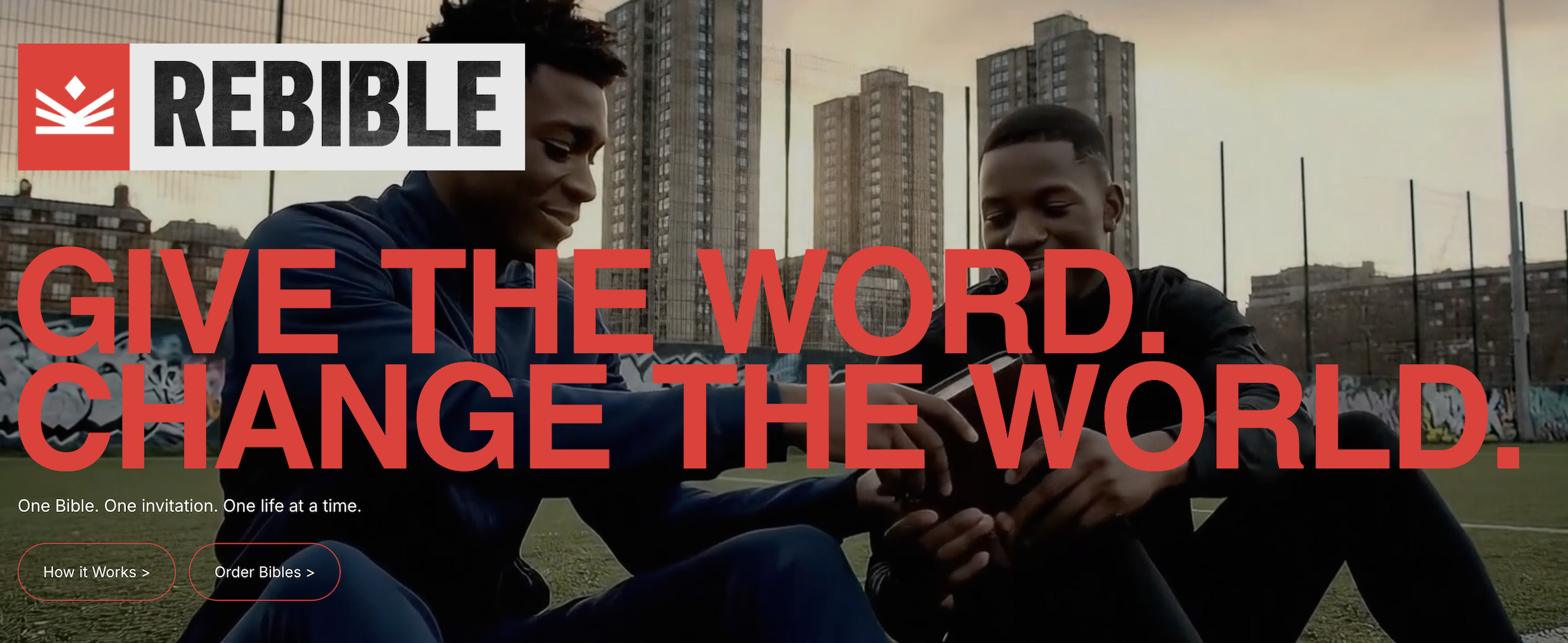
Rebible mission to give away 1 million Bibles in the UK.
Time and again, provision has come—just enough, never too much.
Fruit beyond ourselves
Some of our clients are secular businesses; others are faith-based organisations like Kingsway/CLC Trust. One of the projects we’ve launched together is ReBible—a campaign to equip the UK church to give away one million Bibles.
It’s ambitious. Logistically complex. And deeply hopeful. And it’s gaining traction.
Two convictions for the year ahead
So as we head into 2026, I’ll leave you with two encouragements:
1. Lean into the Christlikeness God is forming in you. That is the path of peace—and the only metric that endures.
2. There is always manna for the morning. Try it. Test it. Taste it.
Grace and peace for the year ahead.
And if you want to connect—or explore whether Here On Up can help with your growth challenges—you can find me on LinkedIn, or on the Spring group chat.