
An Origin Story: Bristol Spring
Bristol Spring (www.BristolSpring.co.uk) is a community of about 100 Christian entrepreneurs, founders, start-ups and creators in Bristol, from more than 20 different churches in the city.
We haven’t grown through church publicity — it has been purely word of mouth — and we gather for coffee and conversation because we are becoming friends and spur one another on in our shared faith, figuring out together what it means to be whole-hearted followers of Jesus as entrepreneurs.
A bit of background. I grew up in South Africa and had a desire to pour my life out for God from a young age. I was blessed to be in a Christian family and grew up on a diet of inspirational books that shaped my view of what it meant to be ‘all in’ for Jesus. Jackie Pullinger’s Chasing the Dragon and Nicky Cruz’s Run Baby Run inspired and shaped me. Billy Graham was a big name in our circles and led a crusade in London — his name was everywhere. All these incredible men and women of God inspired and shaped my belief about what a follower of Jesus should look like.
So, I imagined my life would be that of a missionary, evangelist, or pastor — those who loved God the most, it seemed to me. Through my twenties I held on to that idea: because I loved God, I should serve him in those ways, even if my gifts and passions seemed to point elsewhere.
It wasn’t until my late twenties that some friends helped me see things differently. They reminded me that many of my heroes in the Old Testament — including Abraham, Joseph, Daniel, and David — weren’t what we’d call “full-time ministers”. They were leaders, governors, a warrior king, even innovative farmers. They weren’t all Levites. That opened my eyes to what has been described by others as a “sacred–secular divide”: the idea that some vocations are a little bit more ‘holy’ and others are secular, with the latter probably borne more out of compromise than calling — a mindset I had unintentionally adopted.
It’s worth saying that I’ve never heard any Christian leader preach a sacred–secular divide. It’s more subtle — a cultural undercurrent. The people most celebrated in church life were ministers, preachers, charity workers, and those in the public sector like doctors and nurses, all of whom are deeply worthy of honour. But I often felt like an outlier, as I didn’t fit into any of those categories.
I want to tell you about Bristol Spring, not me — but my story is part of the why behind Bristol Spring. I trained as a lawyer in Bristol and practised for a number of years. I was troubled by how many people couldn’t access legal advice because they had neither legal insurance nor bags of cash. In 2007, I started a company called Everything Legal, with the simple goal of helping people find the right legal advice.
A key part of that business was LawOnTheWeb.co.uk, an award-winning website that grew to over 8,000 pages of free legal information and a “find a solicitor” service. My thesis was that most people didn’t really want a lawyer — they were going through pain: loss of health, a loved one, family, or job. They needed empathy more than litigation. Over time, the site attracted 26,000 visitors a day and generated tens of thousands of enquiries. It was eventually acquired and then integrated into one of the largest legal insurers.
Since then, I’ve done a few other things as well, but through it all, I’ve learned what it’s like to be an entrepreneur and founder. It’s uncertain, lonely, stressful, and at times feels like stepping into a boxing ring every day. But we do it because we care about solving tricky problems, and the drive to be an agent of change outweighs the risk.
Our response
Bristol Spring is a response to this problem. A few of us got together with a vision to support this extraordinary, courageous, and creative group of people who can transform a city through their businesses. We wanted to create a pastoral net to support people — a place for genuine friendships to be formed and a culture that affirms and celebrates peer-to-peer discipleship.
It’s not a charity or a business. It is just an informal community organised via a WhatsApp group. Right at the beginning my prayer was from John 3:6: “Humans can reproduce only human life, but the Holy Spirit gives birth to spiritual life” (New Living Translation). My prayer was, and is, that God himself would build something that brings Kingdom life — otherwise it doesn’t need to exist.
What does the community look like?
There are really four main expressions that have grown organically.
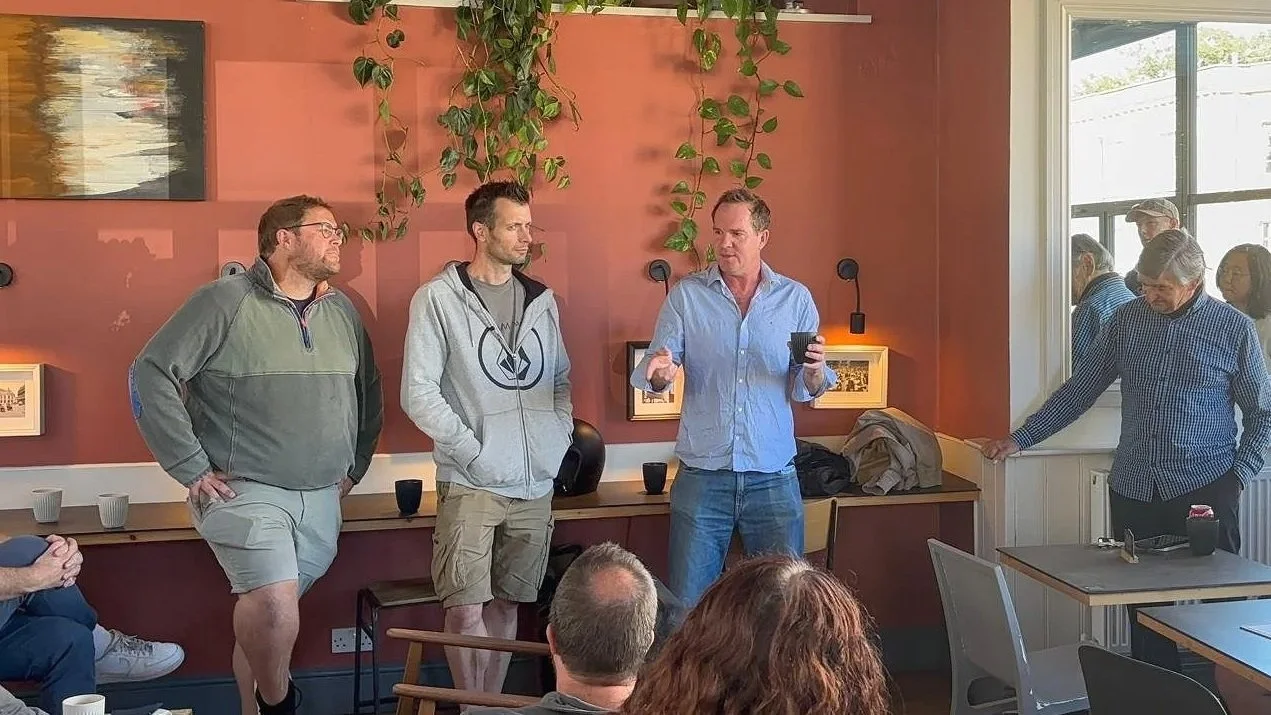
First Friday Coffee Meet-Up
We take over the upstairs of a café on Whiteladies Road for our monthly gathering. There is little to no agenda other than chatting, making friends, and “joining dots” — something we are all accustomed to. We also interview a couple of entrepreneurs each month to help us connect more deeply.
Spring Deeper – Burger and Beer Nights
We meet at a local pub where we go deeper in faith and invite a guest to share their story and speak about what it has been like for them following Jesus.
Springboards
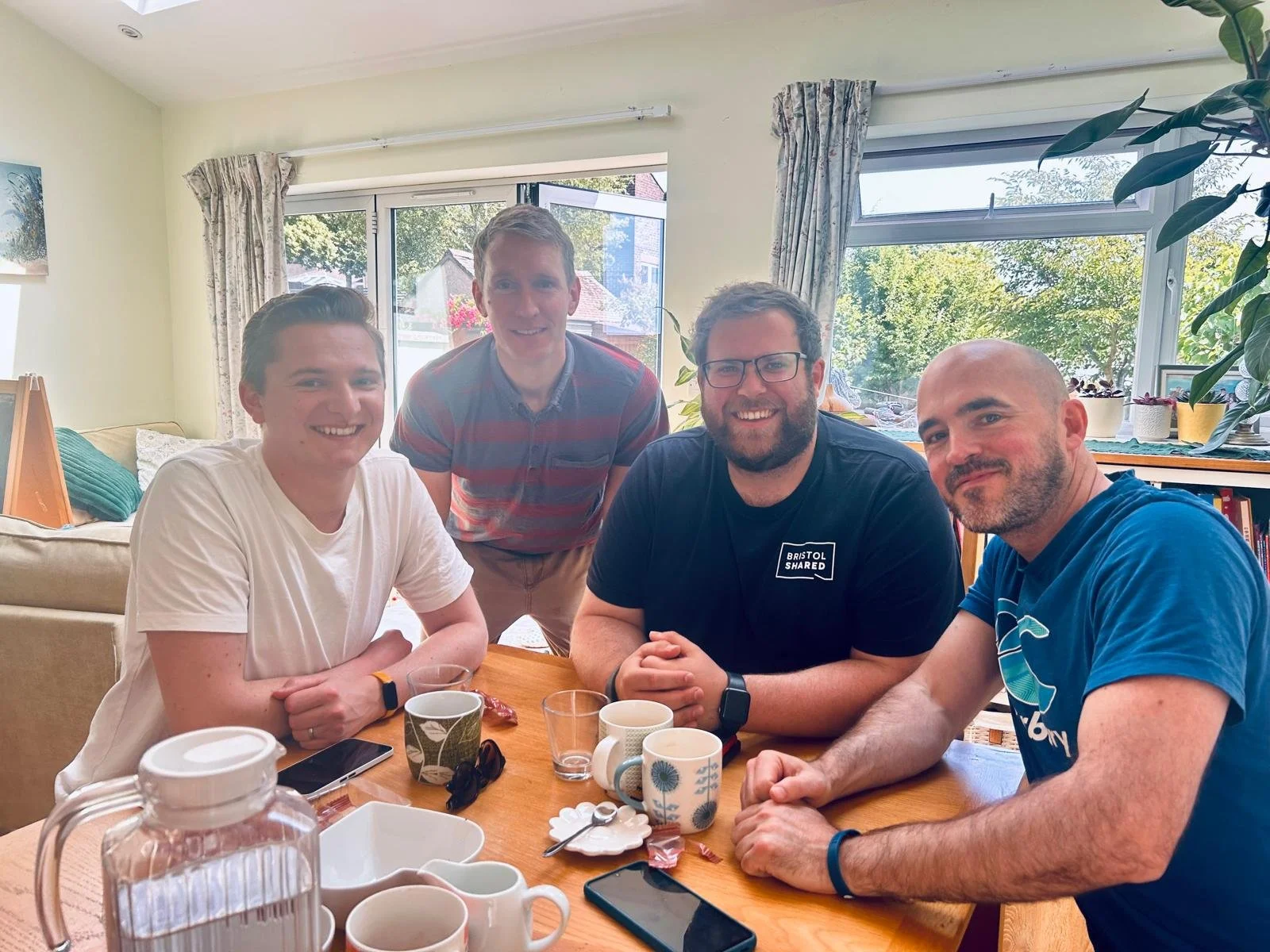
Will Matthews (second from right) Chairs a Springboard of entreprepreneurs
These are a cross between small groups and board meetings. They bring together entrepreneurs for friendly, board-style meetings. Each month, members share ideas, give advice, and pray about personal and work challenges. In this private group there is support, guidance, and new viewpoints to help us harness the extraordinary expertise and wisdom in the community. Members can bring any challenge — cash flow, marketing, tricky clients, work–life balance — and receive half an hour of undivided attention from others who understand their world.
One-to-one mentoring
This looks like a long walk in the fresh air with a takeaway flat white, being real about the journey — expressing hopes and fears, and praying for wisdom to do the right thing even when it is hard. I wish these things had existed when I started my first business.
As with any start-up, culture is everything, and you need to fight for it. What is most important to Bristol Spring as a community?
The number one thing is friendship — not the networking-and-acquaintance kind, but real, deep, sincere friendship.
We have a deep conviction that pastoral care flows naturally out of friendship. When you’re friends with someone, you automatically have their back. You take an interest in their life — not just their business, but their marriage, their kids, their mental health. You share your network, pray for them, and follow up when they’re struggling. You meet for coffee, go for walks, and offer encouragement. It is the body of Christ doing what it does best, and I see this all the time — it warms my heart.
The second thing is generosity. Everything we do as a community is free. This is very important.
This is a place of care and connection, not selling. We help, serve, meet, mentor, and support because we want to — it’s an expression of our discipleship. Psalm 110:3 says that God’s people “will offer themselves freely on the day of your power” (English Standard Version). It is so life-giving for us to do these things. The doors we open outward are the ones that let life flow in (see Proverbs 11:25: “The generous will prosper; those who refresh others will themselves be refreshed”). When we invest in each other we get to see Jesus working.
We get to see the fruit of our lives sometimes growing on the branches of other people’s lives, and we celebrate it as if it were our own.
We offer ourselves as living sacrifices. We “wash” one another’s feet. We support each other as a response to the love we have received from God and one another.
Entrepreneurs
This article was written by Brad Askew for Faith in Business Quarterly - you can subscribe to their magazine here
Entrepreneurs are high-impact people — change agents, creators, visionaries who imagine alternative worlds that don’t yet exist. Their efforts are creating better products and services for the common good.
It’s also true that business and entrepreneurship can sometimes be exploitative — treating success as a win–lose game, where relationships and communities are harmed in the process. Others take a more restrained view, believing the goal is simply to be ethical, much like Google’s early motto, “Don’t be evil” — aiming to avoid harm rather than to do good.
Our aspiration goes further. As Christians, we want to reimagine business through a redemptive framework — one that seeks to do good by creating models that are restorative and marked by justice, mercy, and humility. We pray that this vision will take root through a radical culture of discipleship within Spring.
Our community includes mostly small ventures doing remarkable work: improving medicines through chemistry, supporting young people at risk of exclusion from school, creating digital tools to help churches teach and engage young people, and property managers who are proactively — and in an accountable way, through their Springboards — exploring what it looks like to create and offer accommodation in a way that reflects justice, mercy, and humility.
So, at Bristol Spring, we don’t believe there are “sacred” and “secular” disciples. God doesn’t own businesses — God wants our undivided hearts. When he is Lord, his kingdom comes, and his will is done on earth as in heaven.
It is early days for us, and we hold this with open hands, but my prayer is that it might look like a city transformed through a community of people who are salty and fragrant with the family likeness of Jesus, and who invite many others into the unfolding purposes of God in Bristol and beyond.