
Discovering Creativity and Calling in the World of Product Design
Failure, Innovation and the Long Way Round
By Brad Askew
Meet Neil McQueen.
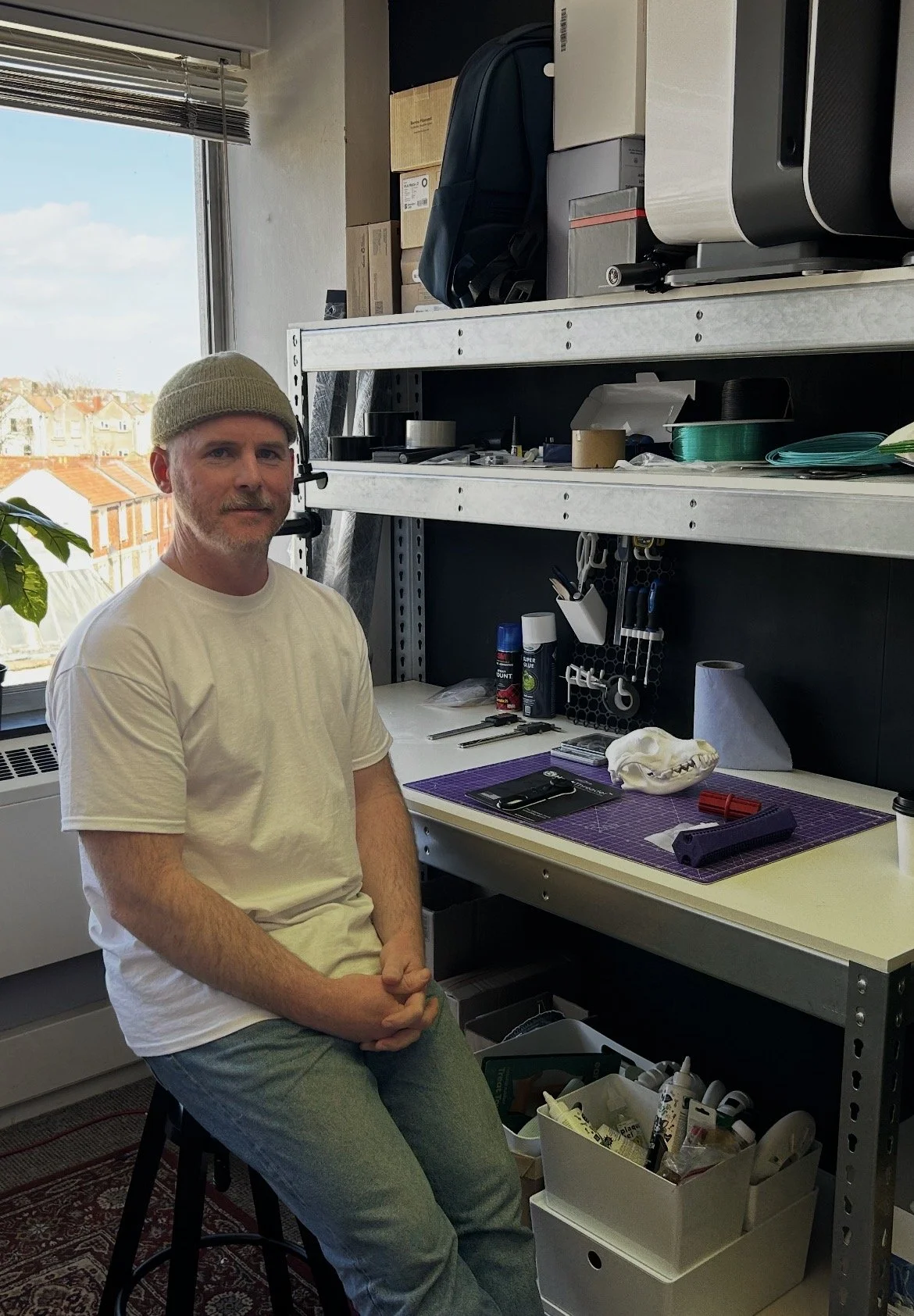
Neil McQueen, C0-Founder Products and Brands
We met for a coffee at stokes-by-the-orchard. We both had a cortado. It is like a flat white but smaller. We talked about his up coming trip back to South Africa, then onto his prototypes, patents and late nights. Neil McQueen was talking about design. Not art. Not branding. Not even creativity in the abstract, but design as discipline, design as persistence, design as cost.
Prototypes, Possibility and the Energy of Making
We were surrounded by prototypes of ingenious products that do not yet exist in the real world. I wish I could tell you about them. Some were elegant solutions to problems that have quietly frustrated me for years—ideas he has already brought into physical form, now waiting for their moment beyond that room. Others belonged to his clients, and understandably must remain undisclosed.
Even before the conversation properly began, there was a shared sense of energy—an almost childlike excitement about possibility, about opportunity, about the strange and wonderful reality that something imagined can, with enough persistence, be made real. It’s one of the things I’ve come to recognise and value within the Bristol Spring community. Building is exciting but talking about problems and then creating solutions that make a life a little easier, more interesting or beautiful creates such a buzz.
The Question That Set the Tone
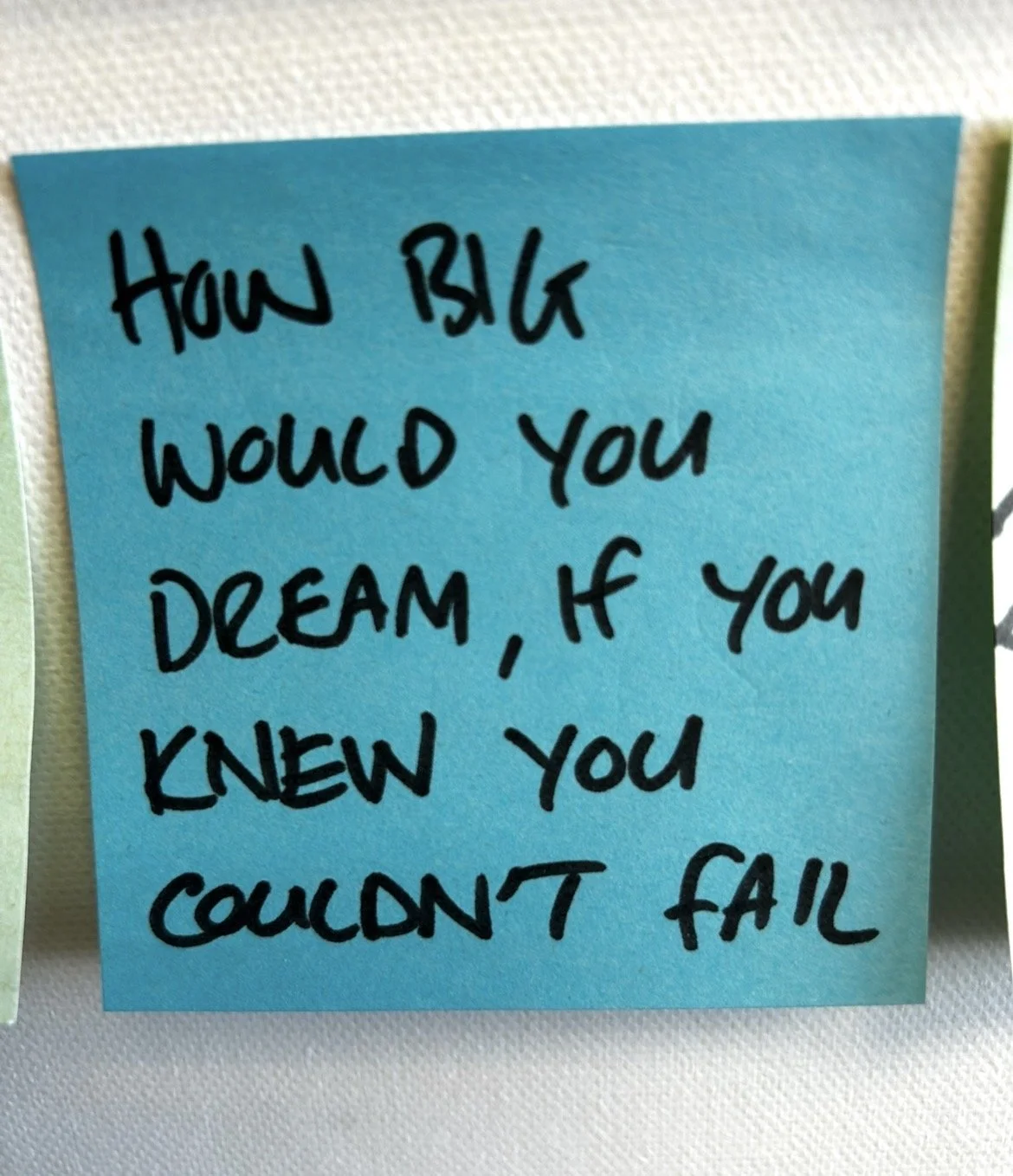
At one point, my attention was drawn to a Post-it note on the whiteboard, sitting beside a cluster of sketches and images. It carried a simple question:
How big would you dream if you knew you couldn’t fail?
In many ways, that question seemed to set the tone for everything that followed.
Why Design Matters More Than We Think
On the surface, it’s a world most of us rarely think about. We interact with products all day long, yet rarely consider the thousands of decisions, failures and iterations behind them. And certainly not the spiritual implications of designing a vacuum cleaner, or an air purifier, or something that never makes it out of the building at all. Yet what emerged wasn’t simply a career story. It was the journey of someone who has had to reframe failure, reimagine creativity, and slowly integrate faith into a world driven by performance, precision and commercial reality. What struck me most was not what Neil has made, but how he has come to understand the process of creating.
A Non-Linear Beginning
Neil’s journey doesn’t begin with clarity. It begins with movement. He was born in Namibia, the son of an itinerant minister, and grew up moving between countries before eventually landing in the UK. It is a background that seems, in hindsight, to mirror the shape of his career—fluid, adaptive, and rarely linear.
Neil arrived in Bristol to study at UWE, he initially chose motorsport engineering, driven by the ambition of becoming a Formula One mechanic. But within months, something felt off. The course was heavily theoretical, far removed from the hands-on, practical world he had imagined.
“This isn’t what I wanted it to be.”
There is a particular kind of honesty required to recognise misalignment that early. Rather than pressing on, Neil chose to change direction, transferring into product design—a field he had not even known existed growing up. The transition was not met with encouragement. He was told, plainly, that he was unlikely to succeed.
And yet, by the end of his degree, he was representing the university. What looked like an early misstep had, in time, become a defining move.
The Wrong Department That Changed Everything
After graduating, Neil joined Dyson. For many, that would feel like arrival. But again, the beginning was not straightforward. He started in the design engineering department and quickly realised he was not thriving. In most organisations, that is where expectations quietly adjust and trajectories flatten.
Instead, he was moved into the cost department—hardly the obvious destination for someone drawn to design and innovation. It is the kind of place that rarely features in stories of creative success.
Yet it became formative. In learning how products are costed—how ideas translate into materials, manufacturing and margin—Neil developed a perspective many designers never fully acquire. He learned not only how to generate ideas, but how to evaluate them in the real world.
“I could develop new ideas and then tell them how much it would cost to develop.”
What had initially felt like displacement became, over time, a differentiator. Creativity grounded in commercial reality is far more likely to survive.
Going Beyond the Job Description
If the cost department shaped Neil’s thinking, it was something else that shaped his trajectory. Not assigned projects or formal responsibilities, but the work he chose to do beyond them.
“I stayed late one night every week… and worked on something that wasn’t my responsibility.”
There is something quietly countercultural about that kind of commitment. It is not driven by recognition, nor immediately rewarded, yet it often becomes the place where real growth happens.
In that space, away from formal expectations, Neil developed ideas that would go on to shape real products. One of those concepts became a patented mechanism that now underpins Dyson’s air purification range.
It is a reminder that innovation is not always scheduled. Often, it emerges from curiosity pursued over time.
The Frustration of Unseen Work
When Great Ideas Don’t Make It
Not everything Neil worked on made it into the world. In fact, some of the projects he is most passionate about never left the building.
“You spend 2 years of your life… and in a half an hour meeting, it’s cut.”
There is a particular kind of frustration in that. Not failure through lack of effort, but through decisions beyond your control—business direction, timing, strategy.
It raises a deeper question about meaning. What do you do when the work you have poured yourself into disappears?
For Neil, it seems to have reinforced a focus not just on outcomes, but on the integrity of the process itself. The work still forms you, even if it never reaches the market.
Rethinking Creativity
Creativity as Persistence, Not Inspiration
When people talk about creativity, they often default to inspiration—moments of clarity or sudden insight. Neil describes something quieter, and perhaps more demanding.
“You just keep trying and trying to solve it from a different way.”
Creativity, in his experience, is iterative. It involves returning to the same problem repeatedly, each time with a slightly different perspective. It requires both persistence and discipline, a willingness to fail and begin again.
This is not aimless experimentation, but thoughtful exploration. Over time, understanding deepens, and solutions emerge not through a single breakthrough, but through sustained attention.
Faith, Creation and the Physical World
At some point, the conversation turned to faith. Not as something separate from work, but as something that informs it.
For Neil, the connection begins with creation itself. The physical world is not random; it is ordered, intricate, and full of insight for those willing to observe it. Much of good design, he suggests, comes from paying attention to what already exists.
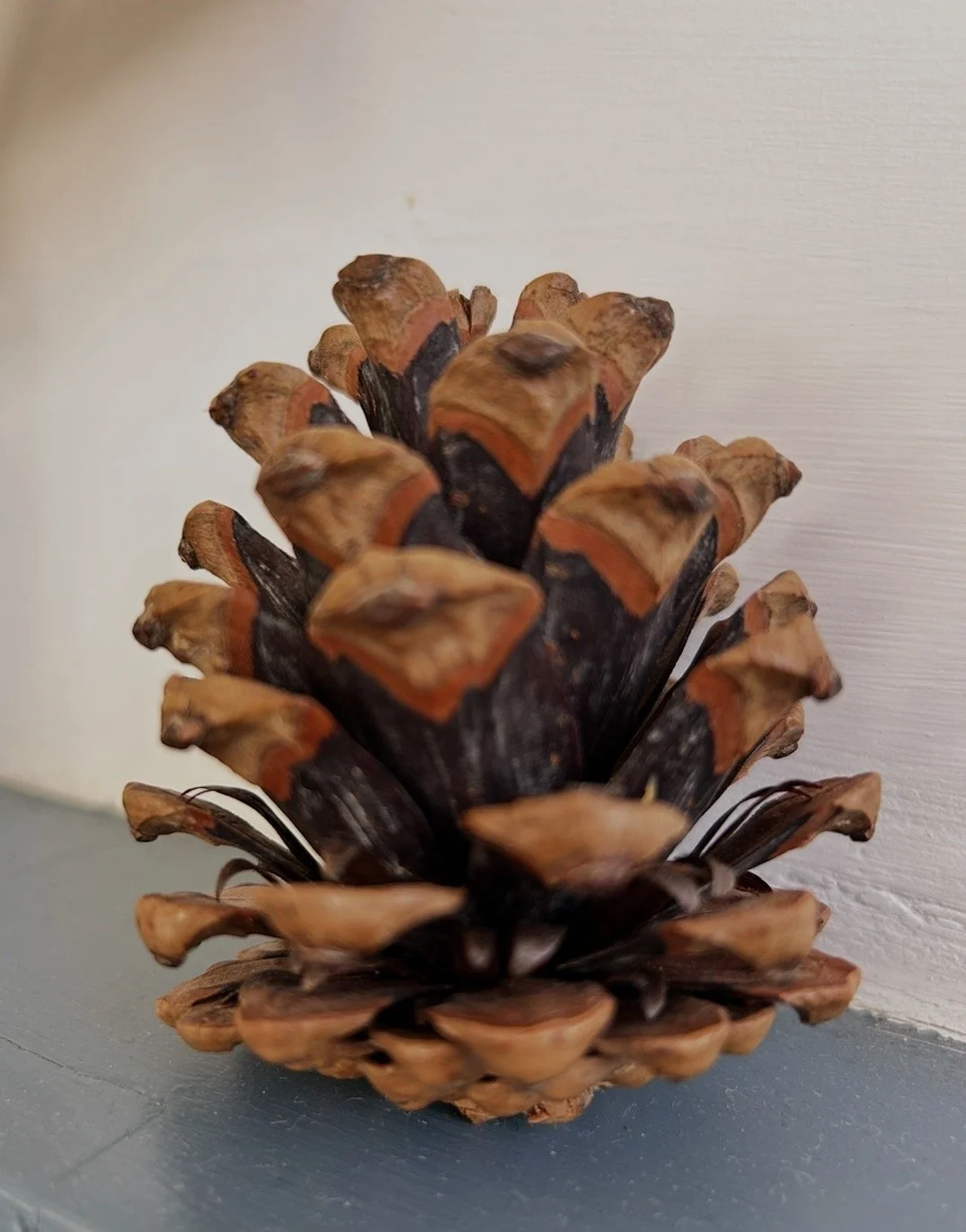
I learned a new word: Biomimicry
It is the practice of designing, innovating, and solving human problems by emulating nature's time-tested patterns, strategies, and processes.
“God is the ultimate creator.”
That belief reframes the act of designing. It is not simply about producing something new, but about working with patterns and principles already embedded in creation.
As I edit this blog for the website my eyes are drawn to a pine cone in the cafe beside me and I suddenly notice the overlapping scales that are open wide in dry air but close when it is raining. Maybe we all need to spend less time in the library and on youtube and more time in the woods!
Faith also shapes how he approaches people. In an industry driven by performance and margin, there is a quiet commitment to honesty, integrity and respect. Not as a strategy, but as a conviction.
Building Something New
From Dyson to Entrepreneurship
After more than a decade at Dyson, Neil stepped into something new—a business of his own.
The transition was not without risk, though it was supported by early investment that provided some initial stability. The focus of the company is clear: helping other businesses turn ideas into reality. Many have vision, ambition and opportunity, but lack the ability to execute at a high level.

A few of the many projects featured on the Products and Brands website.
Neil now works in that gap, enabling others to develop products that can genuinely compete. In doing so, he is not just building products, but helping build businesses. Helping people move from intention to impact.
The Tension of Building - Working In vs On the Business
Like many early-stage ventures, the challenge is not a lack of opportunity but a tension of priorities. Time and energy are constantly divided between delivering for clients and developing the business itself.
There is always more to build—processes, systems, relationships. And beneath it all sits a deeper question of direction: whether to prioritise growth or depth, expansion or excellence.
It is not a tension that resolves once, but one that must be navigated continually.
Failure as Formation - Why Failure Isn’t Wasted
Looking back across Neil’s journey, one theme quietly holds it together: failure, reinterpreted.
Moments that could easily have been seen as setbacks—the wrong course, the wrong department, projects that never launched—have instead become formative. Each has contributed to a deeper understanding, a broader skillset, a more grounded approach.
“I turned that failure into… some amazing lessons.”
It is not that failure is easy, or even desirable. But it is rarely wasted.
I found this one of the most helpful things in our conversation. I sit regularly with founders and it feels like there are two gears. It is working. It is failing. What I hear from Neil, as well as from the quote from Mr Dyson is that we need to be less binary and normalize this discovery/failure journey and build it into our business plans and a feature not a bug.
"Some of the best inventive moments are born out of 'wrong thinking'... The wrong way will lead to mistakes from which you can learn and create new discoveries". James Dyson
Making, Meaning and What Comes Next
The Long View of Building
For now, much of Neil’s work is focused on helping others build. Helping others design. Helping others bring their ideas into the world. But there is a sense that this is not the final destination.
There is a growing desire to develop products of his own—things with lasting impact, shaped not only by capability but by conviction.
In the meantime, the work continues. Iterative, demanding, often unseen.
And perhaps that is where the deeper integration lies. Not in dramatic moments or obvious shifts, but in the steady alignment of craft, character and conviction.
Neil’s story suggests to me that the long way round is rarely wasted. And sometimes, the very things that look like failure are the ones that teach you how and what to build.